
Can You Go to Jail for Not Paying a Promissory Note?

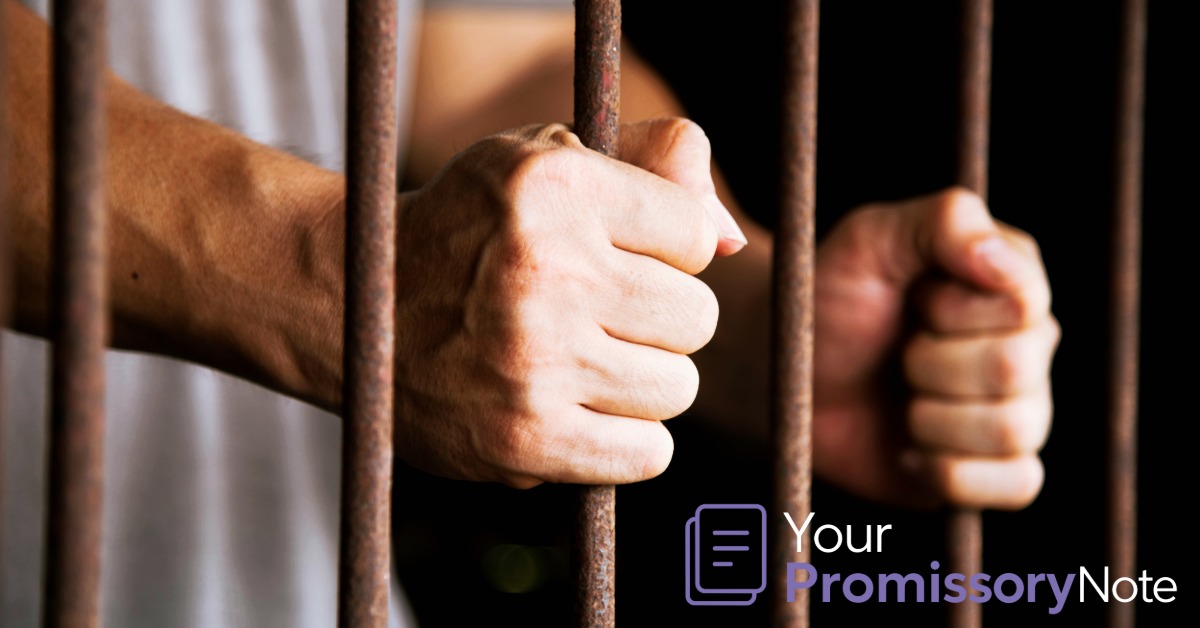
It is one of the first things people search when a debt gets serious and the pressure starts building. Maybe a lender has been sending threatening messages, or someone mentioned legal consequences, or you are simply worried about what happens if the balance keeps going unpaid. The question feels urgent: can failing to repay a promissory note actually land you in jail?
The short answer is no, not in the way most people fear. But the longer answer involves some important nuances that borrowers and lenders both need to understand.
The United States Abolished Debtors Prison in the 1800s
Debtors prisons, facilities where people were imprisoned specifically for failing to repay debts, were abolished across the United States by the mid-1800s. The practice was common in colonial America and carried over from English common law, but state after state eliminated it as the country developed a more modern legal framework for handling civil debt disputes.
Today, federal law under the Fair Debt Collection Practices Act and state consumer protection statutes provide additional layers of protection against creditors using the threat of criminal prosecution to collect civil debts. Simply owing money on a promissory note and being unable or unwilling to pay is a civil matter, not a criminal one. Civil matters result in judgments, garnishments, and liens, not handcuffs.
This is the fundamental legal reality that applies to the vast majority of promissory note situations. A lender who tells a borrower they will go to jail for not paying an unsecured personal loan is either misinformed or deliberately using an illegal scare tactic.
What Actually Happens When You Default on a Promissory Note
When a borrower stops paying on a promissory note, the lender's remedies are civil, not criminal. The process typically starts with a demand letter. If that does not produce payment, the lender can file a lawsuit in small claims court for amounts under the state threshold, which ranges from $5,000 in some states to $25,000 in others, or in civil court for larger amounts.
If the lender wins a judgment, they can use that judgment to pursue collection through wage garnishment, bank account levies, and property liens. In some states, a judgment also allows the lender to conduct a debtor's examination, a court proceeding where the borrower is required to answer questions about their income and assets under oath.
All of that is genuinely consequential. Wage garnishment means losing a percentage of every paycheck until the judgment is satisfied. A bank levy can drain an account with very little notice. A lien on your home prevents you from selling or refinancing without satisfying the debt first. These outcomes are serious enough without the threat of incarceration, which is why lenders with proper documentation through a signed promissory note have real tools available to pursue what they are owed.
The Situations Where Jail Actually Becomes Possible
While failing to repay a debt is not a crime, certain behaviors connected to debt can cross into criminal territory. Understanding the distinction matters for both borrowers who are worried and lenders who are trying to assess what they are actually dealing with.
Fraud is the most significant exception. If a borrower obtained a loan by deliberately providing false information, fabricating financial documents, or misrepresenting their identity or ability to repay, that conduct may constitute criminal fraud. The crime is not the failure to repay. The crime is the deception used to obtain the money in the first place. Federal wire fraud charges have been filed in cases involving promissory notes where the borrower had no intention of repaying from the outset and used the proceeds for undisclosed purposes.
Check fraud is another scenario that occasionally intersects with promissory note situations. Writing a check to satisfy a note when you know the account has insufficient funds is a criminal act in every state, with penalties ranging from fines to felony charges depending on the amount and the state.
Contempt of court is a third pathway that surprises people. While you cannot be jailed for failing to pay a debt, you can be jailed for violating a court order related to that debt. If a judge orders you to appear for a debtor's examination and you skip it, or if a garnishment order is in place and you take deliberate steps to hide income from the court, you can be held in contempt. The jail time is for defying the court's authority, not for the underlying debt.
What About Bouncing Checks Used as Loan Payments
This question comes up in promissory note situations more often than people expect. A borrower who makes payments by check and repeatedly bounces them may face criminal bad check charges depending on how the state treats the conduct. Most states require prosecutors to show the borrower knew the account lacked sufficient funds at the time of writing. Accidentally bouncing a check due to a timing issue is handled differently than deliberately writing checks on an empty account to stall a lender.
For lenders dealing with a borrower who keeps bouncing payments, documenting each returned check carefully is important. The pattern of behavior can support a fraud claim that goes beyond the simple civil collection process, and in states where bad check laws carry criminal penalties the documentation becomes relevant to whether law enforcement gets involved.
Secured Notes and Collateral Complications
If the promissory note is a secured note, meaning the borrower pledged an asset as collateral, the default process involves the collateral as well as the judgment process. A borrower who defaults on a secured note and then sells, hides, or destroys the collateral to prevent the lender from claiming it may face criminal charges for fraudulent conveyance or destruction of secured property in some states.
This is another area where the line between civil debt and criminal conduct becomes relevant. Simply failing to repay is civil. Taking deliberate action to deprive the lender of their secured interest in an asset after default can cross into criminal territory depending on the circumstances and the state.
Student Loan Promissory Notes Are Different
Federal student loans involve a Master Promissory Note, and defaulting on federal student debt triggers a specific set of consequences that differ from private loans. The federal government can garnish wages, intercept tax refunds, and withhold Social Security benefits without going through the court system first. These administrative remedies are more powerful than what a private lender has access to.
Jail is still not a consequence of student loan default itself. However, ignoring court summons related to private student loan collection, failing to appear for required hearings, or committing fraud in the application process can each create separate legal exposure. The default alone does not result in criminal liability, but the behaviors surrounding it sometimes do.
What Lenders Can and Cannot Threaten
The Fair Debt Collection Practices Act prohibits debt collectors from threatening legal action they cannot take or do not intend to take. Threatening a borrower with jail time for failing to pay a civil promissory note is an illegal debt collection practice if made by a third-party debt collector. Private lenders collecting their own debts operate under a slightly different legal framework, but making criminal threats to coerce payment can still expose a lender to liability.
If you are a borrower who has received threats of arrest or criminal prosecution for a standard promissory note default, those threats are almost certainly improper. Documenting them and consulting a consumer protection attorney is worth doing, because the lender making illegal threats may owe you damages under federal or state law.
The Practical Reality for Borrowers Who Cannot Pay
If you are a borrower who cannot repay a promissory note, the most damaging thing you can do is disappear. Ignoring demand letters, avoiding communication, and skipping court appearances is what escalates a civil debt situation into one that starts carrying real legal consequences through contempt orders and default judgments.
Communicating with the lender early, before a lawsuit is filed, opens the door to renegotiation. Most private lenders would rather modify the repayment terms and get something back than spend months in litigation pursuing a borrower who has nothing. A revised installment schedule, a temporary payment deferral, or a negotiated settlement for less than the full balance are all outcomes that are available before the matter goes to court and unavailable after a judgment has been entered.
If the debt is genuinely unmanageable across multiple creditors, bankruptcy is a legal process that provides structured relief and an automatic stay that stops collection actions. Chapter 7 can discharge unsecured promissory note debt entirely in some cases. Chapter 13 allows repayment over three to five years at terms the court supervises. Neither path is painless, but both are legitimate legal options that exist precisely for situations where repayment at the original terms is not realistic.
The Bottom Line for Lenders
Understanding that default is a civil matter, not a criminal one, actually clarifies what your options are as a lender. Your tools are documentation, legal action, and post-judgment collection. A properly drafted and signed promissory note is the foundation of all of those. Without it, your civil remedies are harder to pursue. With it, you have a recognized legal instrument that courts take seriously and that gives you real leverage at every stage of the collection process.
If you lent money without a note and are trying to recover it, the absence of documentation makes your civil case harder but not impossible. Bank records, text messages, and partial payments all help establish that the money was a loan. But going forward, using a complete promissory note before any money changes hands is what keeps you in the strongest possible position if repayment ever becomes a fight.
Jail is not the consequence borrowers face for defaulting on a promissory note. But a judgment, wage garnishment, a bank levy, and years of damaged credit are. For lenders, that is exactly why a signed note matters. And for borrowers, it is exactly why communicating early and honestly with a lender is almost always better than hoping the situation resolves itself.
Sarah McCullen is a writer covering personal finance, lending agreements, and everyday legal documents. Sarah transforms complex promissory note terms into clear, practical guidance so individuals can create and understand agreements without unnecessary confusion.
View all posts →Create Your Promissory Note
Need a promissory note? Create one now for $7.99 - state-specific and professionally formatted.
Get Started - $7.99