
The Five Elements That Turn a Promissory Note Into a Legal Contract

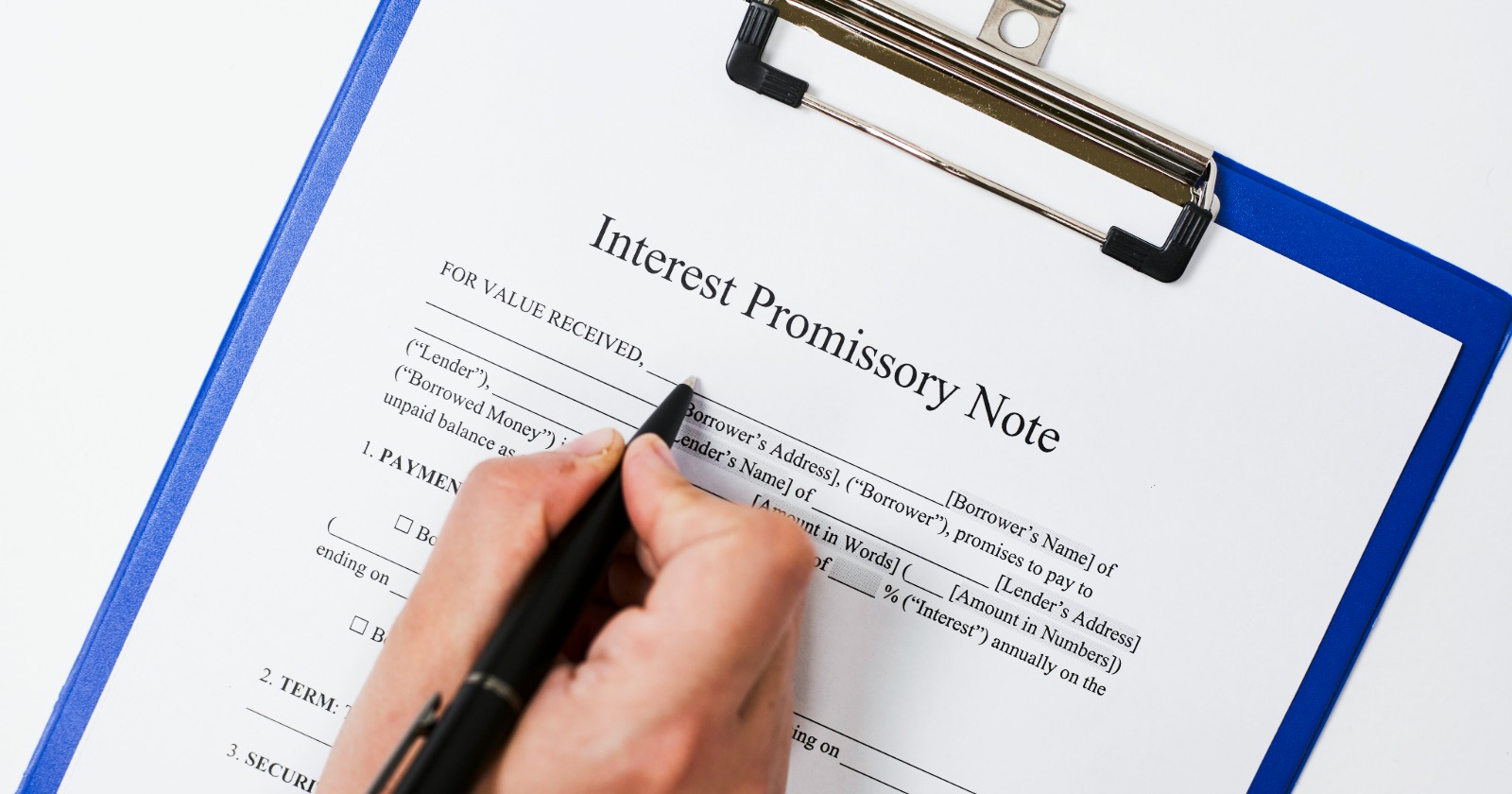
A promissory note is a contract, and like every contract it stands or falls on a handful of legal elements. You can write down a loan, sign it, and still end up with something a court will not enforce if one of those elements is missing. Understanding the five that matter protects you, because you will know before anyone signs if you are holding a binding promise or a document that quietly falls apart when you need it most. That knowledge is the difference between confidence and hope, and it is entirely within your control.
Why contract law governs a note
When you lend money and the borrower signs a note, you are not just recording a favor. You are forming a contract, and contract law is what lets you enforce it. The same rules that govern a business deal or a lease apply to your loan. That is reassuring, because it means centuries of settled law stand behind your note, but it also means your note has to satisfy the same requirements any contract does. Five elements carry the weight, and it helps to walk through each one the way a court would.
Element one: offer
Everything begins with an offer. In a loan, the offer is the lender's proposal to advance money on specific terms, or sometimes the borrower's request to borrow on terms the lender then accepts. Either way, the offer has to be clear about what is being promised. How much money, at what interest rate, paid back on what schedule. When you leave those terms vague, you weaken the offer, and a court may struggle to find a real agreement at all. A well-drafted note states the terms plainly so there is no doubt about what was put on the table.
Element two: acceptance
An offer means nothing until the other side accepts it. Acceptance is agreement to the exact terms offered, and in a promissory note it usually shows up as the borrower's signature. That signature says the borrower read the terms and agreed to them as written. If the borrower tries to change a term, say by crossing out the interest rate, that is not acceptance. That is a counteroffer, and it has to be accepted in turn. When you both sign the same set of terms, you have a clean acceptance, and one of the most common disputes simply cannot arise.
Element three: consideration
Consideration is the element people forget, and it is often the one that sinks a note. It means each side gives up something of value. In a loan, the lender gives up the use of the money, and the borrower promises to repay it with interest. That exchange is the consideration. Where this goes wrong is the gift dressed up as a loan. If you hand someone money with no genuine promise to repay, and later write a note to formalize it, a court may find there was no consideration and refuse to enforce it. The value has to actually flow, and the note should reflect a real exchange, not an afterthought.
Element four: capacity
Capacity means the parties are legally able to enter a contract. Generally, that requires being of legal age, usually 18, and being mentally competent to understand what you are agreeing to. A note signed by a minor is typically voidable, meaning the minor can walk away from it. A note signed by someone who was incapacitated, whether through serious mental impairment or, in some cases, intoxication severe enough to prevent understanding, can be challenged on the same ground. Before you lend, it is worth a moment to be sure the person signing has the legal capacity to bind themselves, because a note they can void is barely a note at all. Rules on the exact threshold vary by state, so a note in Florida may be tested a little differently than one elsewhere.
Element five: lawful purpose
Finally, the loan itself has to be for a legal purpose. A court will not enforce a contract that requires or funds something illegal. The clearest example in lending is usury. If the interest rate exceeds the legal maximum your state allows, the note can be unenforceable in whole or in part, and some states impose penalties on the lender. A loan made to finance an unlawful activity fails for the same reason. When you keep the purpose lawful and the interest within legal limits, you remove one of the easiest ways for a borrower to escape the debt.
What happens when an element is missing
The danger is that a missing element does not announce itself. A note with no real consideration, or one signed by someone who lacked capacity, looks exactly like a valid note until the day you try to enforce it. Then the borrower raises the defense, and you discover the paper you trusted will not hold. This is why the elements are worth checking at the start, not after a dispute begins. A little care up front spares you a great deal of trouble later, and it costs nothing but attention.
Building a note that holds
The reassuring part is that satisfying all five elements is not hard. State the terms clearly so the offer is unmistakable. Have both parties sign so acceptance is documented. Make sure real value is exchanged so consideration exists. Confirm each signer has legal capacity. Keep the purpose and the interest rate lawful. Do those five things and you will have a note that stands on solid contract-law ground. If you want a starting point, a well-structured promissory note template makes it easier to cover every element without missing one. Think of the five elements as a checklist you run before the ink is even dry. Each one takes only a moment to confirm, yet together they decide whether your note is a promise the law will stand behind or simply a hopeful piece of paper. The care you invest at the beginning is the care that protects you at the end, and that is a trade worth making every single time you lend.
Sources
James Stackpoole is a personal finance writer who covers lending, contracts, and everyday legal documents. He focuses on making complex financial topics approachable for borrowers and lenders navigating agreements outside of traditional institutions.
View all posts →Create Your Promissory Note
Need a promissory note? Create one now for $7.99 - state-specific and professionally formatted.
Get Started - $7.99