
Promissory note terms explained: principal, maturity, bearer, and more

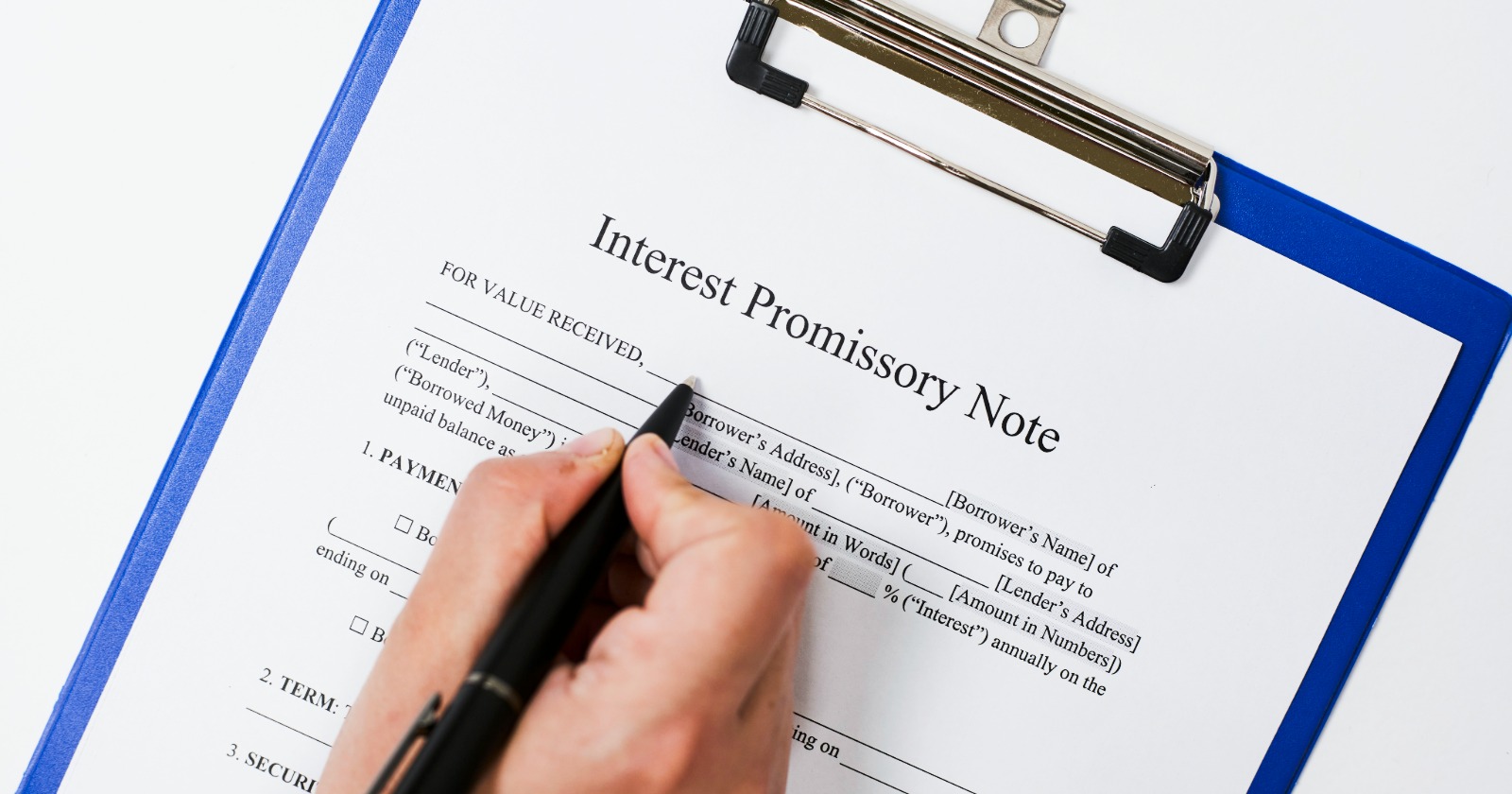
The first time you read a promissory note, the vocabulary can feel like a wall. Many of the words are centuries old, and several come straight from Article 3 of the Uniform Commercial Code, the model law on negotiable instruments that states enact in their own statutes. Once you know what each term is doing, a promissory note becomes a short, readable document. Here are the terms you will meet, grouped by the job each one performs.
The parties: maker, payee, and holder
The maker is the borrower, defined in state-adopted Article 3 as a person who signs or is identified in a note as a person undertaking to pay. In Virginia, for instance, that definition sits in section 8.3A-103 of the state code. The payee is the party named to receive the money, usually the lender who handed it over.
The holder is the one you pay, and it is not always the payee. State definitions describe a holder as the person in possession of a negotiable instrument payable either to bearer or to an identified person who is the person in possession. A lender can sell or assign a note, and the borrower then owes the same money to someone new. If you are the borrower, ask for written notice before sending a payment to a new address.
The money: principal, interest, and the interest rate
Principal is the amount actually lent, not the total that will eventually be repaid. Interest is the price of using that money over time, and the interest rate is the percentage applied to the unpaid principal. Three details about the rate deserve a line in the note: the annual percentage figure, whether interest is simple or compounds on unpaid interest, and how the rate for each period is worked out. Before you sign, a loan payoff calculator will show you the total cost.
One piece of the money picture is easy to forget. Interest you collect is income. The Internal Revenue Service (IRS) treats most interest you receive as taxable in the year it becomes available to you, so keep a record of how much of each payment was interest and how much repaid principal.
The timing: maturity date, installment, and demand
The maturity date is the day the final payment comes due and the note matures. An installment note reaches that day through fixed payments on a stated schedule, usually monthly. A demand note has no schedule at all, because the money is due when the holder asks for it.
Here is the trap. Article 3 treats a promise as payable on demand if it says it is payable on demand or at sight, if it otherwise indicates that payment is at the will of the holder, or if it does not state any time of payment. Leaving the timing blank does not give the borrower an open-ended loan. It creates a demand note, and the full balance can be called at any time.
Who gets paid: order, bearer, and endorsement
A note payable to order names an identified person. A note payable to bearer does not. Under the bearer and order rules, a promise is payable to bearer if it says so, if it names no payee at all, or if it otherwise indicates that whoever possesses it is entitled to payment. Bearer paper is risky to store loosely, since possession alone supports a claim to the money.
An endorsement is the signature that moves a note along. Article 3 describes it as a signature, other than that of a signer as maker, drawer, or acceptor, made on the instrument to negotiate it, to restrict payment, or to take on endorser liability. An endorsement naming a new person keeps the note on the order track. An endorsement in blank, which is just a signature, converts order paper into bearer paper.
Negotiability, and why the word matters
A negotiable instrument is an unconditional promise or order to pay a fixed amount of money, payable to bearer or to order, payable on demand or at a definite time, and containing no other undertakings by the person promising to pay beyond the payment of money, apart from narrow exceptions for collateral, confession of judgment, and choice of forum. Article 3 then adds the line that defines our document: an instrument is a note if it is a promise.
Why care? A negotiable note travels well. A later holder who takes it in good faith can generally enforce it with fewer defenses available to the maker than the maker would have had against the original lender. A note that fails the negotiability test is not void. You can still sue on it as a contract, but it carries the original disputes with it.
The security: collateral, security interest, guarantor, and co-maker
An unsecured note rests on the borrower's promise alone. A secured note adds collateral, meaning specific property the lender can reach if payment stops. The lender's claim on that property is the security interest. Under Article 9, a security interest attaches to collateral once it becomes enforceable against the debtor, and it becomes enforceable when value has been given, the debtor has rights in the collateral, and a formal step is satisfied, typically a security agreement signed by the debtor that describes the collateral.
Two roles let other people stand behind the debt, and they differ. A co-maker signs the note itself and is a maker, owing the same obligation as the borrower from day one. A guarantor promises to pay if the borrower does not. Article 3 calls someone who signs for another person's benefit an accommodation party: a party who signs to incur liability without being a direct beneficiary of the value given, and who must pay in the capacity in which they signed even though they received nothing.
What happens on default: grace period, acceleration, and remedies
Default means whatever your note says it means. A missed payment is the usual trigger, and notes often add others, such as a bankruptcy filing, the sale of pledged collateral, or lapsed insurance on it. A grace period is the stated stretch of days after a due date before a payment counts as late or a late charge applies. It is a contract term you write in, not something the law supplies, so a silent note has none.
Acceleration is the clause that makes the whole unpaid balance due at once after a default. Article 3 expressly allows acceleration without spoiling a note's definite time of payment, so a fixed maturity date and an acceleration clause sit together comfortably. After acceleration, remedies follow from the documents: a demand letter, repossession or foreclosure under the security agreement, or a suit on the note itself.
The ending: satisfaction and discharge
Satisfaction is the happy word in this glossary. The debt has been paid in full and the obligation is over. Article 3 also describes how a holder can release a party on purpose, through a voluntary act such as surrendering the instrument to that party, destroying or cancelling it, striking out a signature, or by agreeing in a signed record not to sue.
Close the loop on paper. A borrower should receive the original note marked paid or a signed release naming the note and the date it was satisfied. A secured lender should also release any lien filing against the collateral, since a stale filing can block the borrower's next loan or sale long after the money changed hands.
None of this vocabulary exists to intimidate you. Each term answers one question a future reader will ask: who promised, how much, by when, on what security, and what happens if the money does not arrive. Read your draft with that list beside you, and the gaps tend to announce themselves.
Sources
- Va. Code § 8.3A-103 (definitions, including maker)
- Va. Code § 8.3A-104 (negotiable instrument; note)
- Va. Code § 8.3A-108 (payable on demand or at a definite time)
- Va. Code § 8.3A-109 (payable to bearer or to order)
- Va. Code § 8.3A-204 (endorsement)
- Va. Code § 8.3A-419 (instruments signed for accommodation)
- Va. Code § 8.3A-604 (discharge by cancellation or renunciation)
- Va. Code § 8.1A-201 (general definitions, including holder)
- Va. Code § 8.9A-203 (attachment and enforceability of a security interest)
- IRS Topic no. 403, Interest received
James Stackpoole is a personal finance writer who covers lending, contracts, and everyday legal documents. He focuses on making complex financial topics approachable for borrowers and lenders navigating agreements outside of traditional institutions.
View all posts →Create Your Promissory Note
Need a promissory note? Create one now for $7.99 - state-specific and professionally formatted.
Get Started - $7.99