
How to Write a Promissory Note: A Complete Step-by-Step Guide

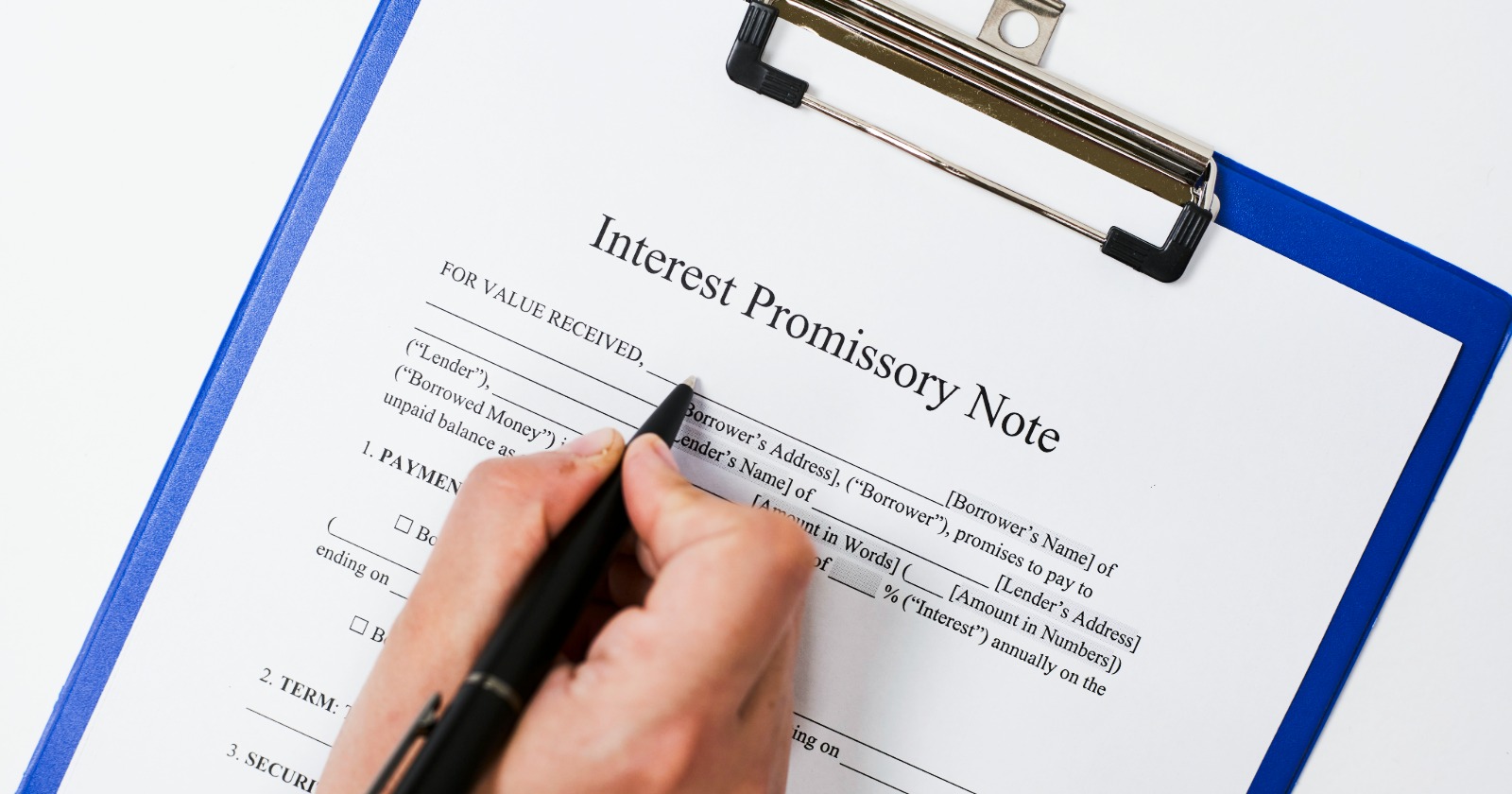
A promissory note is a written promise to repay borrowed money on agreed terms, and it's the single document that decides whether you can actually collect if a loan goes sideways. Get it right and you have a clean, enforceable record. Get it wrong and you're stuck arguing over a text message and a handshake. A well-drafted note protects the lender's money and the borrower's credibility at the same time, because it fixes in writing exactly what both sides agreed to. This guide walks through every element a solid promissory note needs, in the order you'll write them, and closes with the mistakes that quietly break DIY notes.
Step 1: Name the parties precisely
Start with who owes and who's owed. The lender (also called the payee) is the person or entity extending the money. The borrower (the maker) is the one promising to pay it back. Use full legal names, not nicknames, and add current mailing addresses for both. If either side is a business, name the entity exactly as it's registered with the state and identify the signer's title, for example a managing member or an officer. Vague party names are a favorite defense in collection cases, so leave no room for a borrower to claim the note names someone else. If more than one person is borrowing, decide whether they're jointly and severally liable, meaning you can pursue either one for the full balance, and say so in the note.
Step 2: State the principal amount
The principal is the exact sum being lent, written in both numerals and words, for example $10,000 and ten thousand dollars. Spelling it out prevents a stray digit from turning a $1,500 loan into a $15,000 dispute. Note the date the funds are actually delivered and the method, whether that's a wire, a check number, or an electronic transfer. That delivery record matters later if the borrower ever claims the money never arrived. If the loan will be advanced in stages rather than all at once, describe the schedule of advances so the principal is never in doubt at any point in the loan's life.
Step 3: Set the interest rate (and stay under the cap)
Decide whether the loan carries interest and, if so, at what annual rate. State the rate clearly and whether it's simple or compounding, and if compounding, how often. Two guardrails matter here. First, keep the rate below your state's legal ceiling; charging above it is usury, and it can cost you the interest or void the note entirely. Run your number through our usury limit checker before you commit. Second, if you're lending to family or friends at a low or zero rate, the Internal Revenue Service (IRS) can treat the foregone interest as imputed income under Section 7872, though gift loans directly between individuals generally get a pass while the aggregate balance stays at or below $10,000. For anything larger, the IRS publishes monthly Applicable Federal Rates that set the floor to avoid imputed-interest complications.
Step 4: Define the repayment schedule
This is where note types diverge. An installment note sets fixed periodic payments, say $250 on the first of each month, until the balance is cleared. A demand note has no fixed schedule; the full balance comes due whenever the lender asks for it. Spell out the payment amount, frequency, due dates, and where payments are sent. Note how each payment is applied, typically to accrued interest first and then to principal, so the running balance is never in question. If you want to allow early payoff without penalty, say so, and our loan payoff calculator helps both sides see how extra payments shrink the balance and the total interest paid over the life of the loan.
Step 5: Add a maturity date or demand trigger
Every note needs an endpoint. For term loans, that's the maturity date, the day the final payment is due. For demand notes, the trigger is the lender's written request for payment. Either way, the endpoint drives the clock on enforcement. Under the Uniform Commercial Code, an action to enforce a note payable at a definite time generally must begin within six years of the due date, and many states run a similar limitations period for written contracts. A clear maturity date protects your right to sue by making the start of that clock unmistakable. For demand notes, the clock typically starts when demand is made, which is one reason lenders keep dated copies of every demand letter they send.
Step 6: Spell out default, late fees, and acceleration
Define exactly what counts as default, usually a missed payment that isn't cured within a set grace period, say 10 days. Then state the consequences: a late fee (a flat amount or a small percentage, again within legal limits), and an acceleration clause that lets you demand the entire remaining balance at once if the borrower defaults. Without acceleration, you may be forced to chase each missed installment separately, which turns collection into a slow and expensive grind. Consider adding a clause that shifts reasonable attorney fees and collection costs to the borrower if you have to enforce the note; without it, you generally pay your own legal bills even when you win. This section is what turns a note from a polite IOU into a real collection tool.
Step 7: Choose secured or unsecured
An unsecured note is backed only by the borrower's promise. A secured note is backed by collateral, a car, equipment, or property you can claim if the borrower doesn't pay. If you're securing the note, describe the collateral specifically (make, model, VIN, serial number, or legal property description) and, for larger loans, file the appropriate lien or UCC financing statement so your claim is on record and takes priority over later creditors. Secured notes are harder to write but far easier to collect on, because a defined asset stands behind the debt. Weigh the effort against the size of the loan: a small personal advance rarely justifies filing a lien, while a five-figure loan almost always does.
Step 8: Add governing law and signatures
Name the state whose law governs the note; this decides which usury cap and limitations period apply. Then sign. The borrower's signature is mandatory. Many lenders also sign, and adding the date next to each signature closes off later disputes about timing. For added weight, especially on secured or high-value notes, have the signatures notarized. A notary won't make an otherwise invalid note valid, but it confirms identity and makes the signatures much harder to challenge. A witness or two serves a similar purpose in states that recognize them. Sign in ink, or use a reputable electronic signature service that preserves an audit trail, and make sure every blank on the form is filled before anyone signs.
Common mistakes to avoid
The recurring errors are predictable. People leave the interest rate blank, skip the acceleration clause, forget to state a maturity date, or never specify governing law. Others let the borrower keep the only signed copy, then have nothing to show a court. Always keep the original signed note in a safe place and give the borrower a copy, not the reverse. Don't reuse a generic template without checking that its interest, default, and signing terms actually fit your state; a note that ignores your state's usury cap can be worth far less than the paper it's printed on. And don't rely on side agreements made by text or email, because a court reads the note first. If a term matters, it belongs in the signed document itself.
Sources
Sarah McCullen is a writer covering personal finance, lending agreements, and everyday legal documents. Sarah transforms complex promissory note terms into clear, practical guidance so individuals can create and understand agreements without unnecessary confusion.
View all posts →Create Your Promissory Note
Need a promissory note? Create one now for $7.99 - state-specific and professionally formatted.
Get Started - $7.99