
Arbitration and jury-waiver clauses in a promissory note

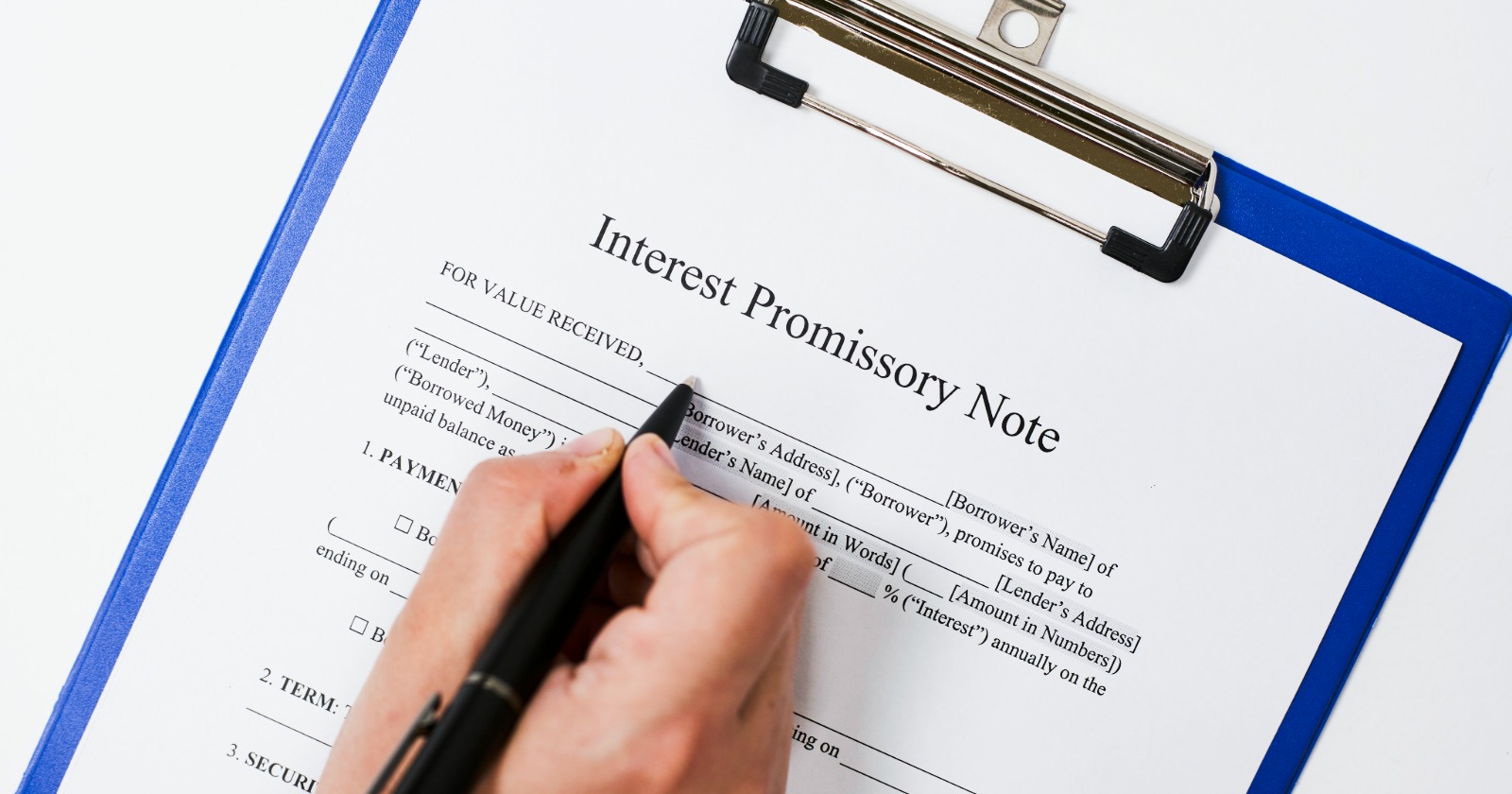
Most promissory notes are short, and most never end up in a courtroom. The ones that do usually reveal a gap: nobody decided in advance how a fight would be resolved. A dispute-resolution clause fills that gap. It can send the case to arbitration, waive the right to a jury, pick the courthouse, or all three. Each choice trades something away, so it's worth understanding what you're getting before you paste in boilerplate.
What arbitration gives you and what it costs
Arbitration replaces a judge and jury with a private decision-maker chosen under rules the parties agreed to. Its selling points are speed, privacy, and finality. A collection case on a installment note can often be heard and decided in months rather than years, the filings aren't public, and the award is very hard to overturn.
The costs are real, though. The arbitrator bills by the hour, and filing fees with the major arbitration providers run well above court filing fees. There's almost no appeal; the Federal Arbitration Act permits a court to throw out an award only on narrow grounds like fraud, corruption, or an arbitrator who plainly exceeded the agreed authority. And for a simple unpaid note, arbitration can actually be slower and pricier than a small-claims or summary-judgment path, where a lender with a signed note and a payment history often wins quickly. If your note is for $8,000, a $2,000 arbitration fee is a bad trade.
How the Federal Arbitration Act makes these clauses stick
The reason arbitration clauses are nearly everywhere is a 1925 statute. Section 2 of the Federal Arbitration Act (9 U.S.C. 2) says a written arbitration provision in a contract involving commerce shall be valid, irrevocable, and enforceable, save upon such grounds as exist at law or in equity for the revocation of any contract. Courts read "involving commerce" broadly, so almost any loan between parties in different states, or any loan by a business, qualifies. State laws that single out arbitration clauses for harsher treatment are preempted, which is a legal way of saying the federal statute overrides them.
The practical result: if your note has a clear arbitration clause and the borrower sues in court, the lender can ask the judge to stop the case and compel arbitration, and the judge usually must grant it.
When a court refuses to enforce an arbitration clause
That "save upon such grounds" language in section 2 is the escape hatch. General contract defenses still apply, and the most common one is unconscionability. Courts look for two things together: a process that was unfair (tiny print, no chance to negotiate, a borrower who couldn't understand it) and terms that are one-sided (only the lender can go to court, the borrower must arbitrate a thousand miles away, the borrower pays all fees, remedies are stripped). A clause that fails on both counts gets tossed.
Other grounds include a clause the borrower never actually signed or saw, a clause added after the fact, and a clause so vague that nobody can tell what it covers. Since 2022 the Act also carves out sexual-harassment and sexual-assault claims, which won't matter for a loan but shows Congress is willing to chip at the rule.
Jury-trial waivers
A jury waiver is the middle path. The case stays in court with a judge, the normal rules of evidence and appeal apply, but there's no jury. Lenders like this because judges tend to decide note cases on the documents, while juries sometimes sympathize with a borrower who's fallen on hard times. Borrowers should know that a bench trial is generally quicker and cheaper too.
Enforcement is a matter of state law, and it varies. Many states enforce a knowing and voluntary pre-dispute jury waiver if it's conspicuous, usually in bold or capital letters, and signed. A few states, California among them, don't allow pre-dispute jury waivers in contracts at all. If your note might be litigated in one of those states, don't rely on the waiver as your only protection.
Venue, forum, and governing-law clauses
Even without arbitration, you can decide which state's law governs the note and which courts hear disputes. A governing-law clause picks the rulebook; a forum-selection clause picks the courthouse. Pick the state where the lender lives or where the note was signed, and make sure the chosen law actually allows the interest rate you're charging (check with the usury limit checker). Courts enforce these clauses as long as the chosen forum has some connection to the deal and the clause isn't being used to strand a consumer far from home.
Governing law also affects how long you have to sue on the note. Limitations periods for written contracts range widely by state, and the statute of limitations lookup shows the difference.
Should your note have any of this?
For a small personal loan between people in the same state, the honest answer is usually no arbitration clause. A plain forum clause and a governing-law clause cover most of what matters, and the lender keeps the fast court remedies. Arbitration earns its place in larger business notes, notes between parties in different states, and notes where the lender values confidentiality more than a cheap default judgment. A jury waiver is a reasonable add for any commercial note in a state that honors it.
Whatever you choose, make it mutual. A clause that binds only the borrower is the first thing an unconscionability argument targets.
Sample clause language
Here's an arbitration clause built to survive scrutiny: Any dispute arising out of or relating to this Note shall be resolved by binding arbitration administered under the rules of a recognized arbitration provider selected by the parties, before a single arbitrator, in [County, State]. Each party shall bear its own attorney fees, and the parties shall split the arbitrator's fees equally unless the arbitrator orders otherwise. Judgment on the award may be entered in any court of competent jurisdiction. This clause is governed by the Federal Arbitration Act.
A jury waiver should be short, bold, and near the signature line: EACH PARTY KNOWINGLY AND VOLUNTARILY WAIVES ANY RIGHT TO A TRIAL BY JURY IN ANY ACTION ARISING OUT OF OR RELATING TO THIS NOTE.
And a forum clause: This Note is governed by the laws of the State of [State]. The parties consent to the exclusive jurisdiction of the state and federal courts located in [County, State] for any action arising out of this Note.
Don't stack an arbitration clause and a forum clause that point in different directions; that contradiction is a gift to whichever side wants out. Pick one path, write it clearly, and have both parties initial it.
Sources
Sarah McCullen is a writer covering personal finance, lending agreements, and everyday legal documents. Sarah transforms complex promissory note terms into clear, practical guidance so individuals can create and understand agreements without unnecessary confusion.
View all posts →Create Your Promissory Note
Need a promissory note? Create one now for $7.99 - state-specific and professionally formatted.
Get Started - $7.99